
Gatwick Airport Limited supports journey to net zero with new Wildlife Trust partnerships
- Airport operator leads the way with innovative approach to nature-based greenhouse gas removals to help restore natural habitats while capturing carbon
- Gatwick Airport Limited (GAL) has been matched with two high quality conservation projects delivered by Somerset Wildlife Trust and Kent Wildlife Trust that meet the industry-leading “Wilder Carbon Standard for Nature and Climate”
- New initiative comes as the airport marks the halfway point in its Decade of Change sustainability strategy
Gatwick Airport Limited (GAL) has partnered with two Wildlife Trusts to help remove carbon emissions.
Building on GAL’s industry-leading approach to biodiversity, which has seen it awarded the Wildlife Trust Biodiversity Benchmark for the past 11 years, the airport operator is now partnering with Kent and Somerset Wildlife Trusts.
The partnerships will support two new projects which will see degraded former agricultural land transformed into species-rich habitats over the coming years.
These projects will help to support wildlife and ecology, contribute to flood alleviation, and benefit local communities for years to come, while also capturing carbon.
The projects have been facilitated by Wilder Carbon, a not-for-profit which matches organisations looking to expand their sustainability work with wildlife organisations which deliver high quality environmental projects.
GAL has invested £1m which will be used to remove 10,000 tonnes CO2e via the Wilder Carbon projects at Ironhurst Valley Nature Reserve in Kent and Honeygar Farm in Somerset .
These carbon emissions will be significant proportion of what’s left after GAL has successfully delivered a £250million capital programme to reduce carbon emissions as far as possible.
This carbon removed from the atmosphere via these projects will “offset” the residual emissions generated by the airport operator between 2030 and 2039, which cannot be eliminated.
GAL is making this investment now to assure the transformation of these sites, paving the way for future benefits in the decades to come.
Mark Edwards, Head of Sustainability, London Gatwick said: “We have an unwavering commitment to sustainability and to achieving our aim of being net zero for emissions under our direct control by 2030. We are making great progress, as detailed in our 2025 Sustainability Report .
“We are doing all we can to reduce our carbon footprint but come 2030 a small proportion of greenhouse gas emissions will remain. We won’t be able to eradicate these emission sources for various reasons such as the technology not yet existing.
“In order to achieve Net Zero, we will need to remove these residual emissions.
“Collaborating with Wilder Carbon offered us the opportunity to support local, high integrity , nature-based projects that offered considerable benefits in addition to carbon removal.
“We carefully considered which projects to partner with and I’m delighted that Ironhurst is so close to the airport. I’m excited to see how nature will transform Ironhurst and Honeygar over the coming years as our partnership progresses. Our thanks go to the Wilder Carbon team for helping us find our partner sites, and to the two Trusts.”
Georgia Dent, Chief Executive Officer, for Somerset Wildlife Trust said: “If we’re serious about restoring nature at scale, we need responsible organisations which have a demonstrable commitment to reducing carbon emissions to invest in high quality, impactful projects that lock up carbon and rebuild biodiversity here in the UK.
“This investment relates specifically to emissions from London Gatwick’s own existing operations – and is part of their overall commitment to reach net zero. This partnership will help restore habitats and keep carbon secured in healthy peat at Honeygar for generations to come, delivering lasting benefits for climate and wildlife in Somerset.”
Ben Dart, Chief Operating Officer at Kent Wildlife Trust said: "Ironhurst Valley Nature Reserve represents exactly the kind of long-term, high-integrity investment that UK nature recovery urgently needs.
“By partnering with Gatwick Airport, we're able to restore native habitats that will lock up carbon, strengthen biodiversity, and deliver lasting ecological benefits for Kent and beyond."
Sarah Brownlie, Programme Director, Wilder Carbon said: “We are delighted to see GAL adopting the Wilder Carbon Standard for Nature and Climate for this important investment in UK nature recovery. By committing to high-integrity natural climate solutions, Gatwick is securing long-term carbon benefit while restoring diverse native habitats that strengthen biodiversity and ecosystem resilience.
“Early investment is critical; it unlocks the finance needed to establish projects now, so that verified climate and nature benefits are delivered over the decades ahead.
“This partnership demonstrates how responsible organisations can decarbonise and address residual emissions while contributing meaningfully to nature recovery at scale.”
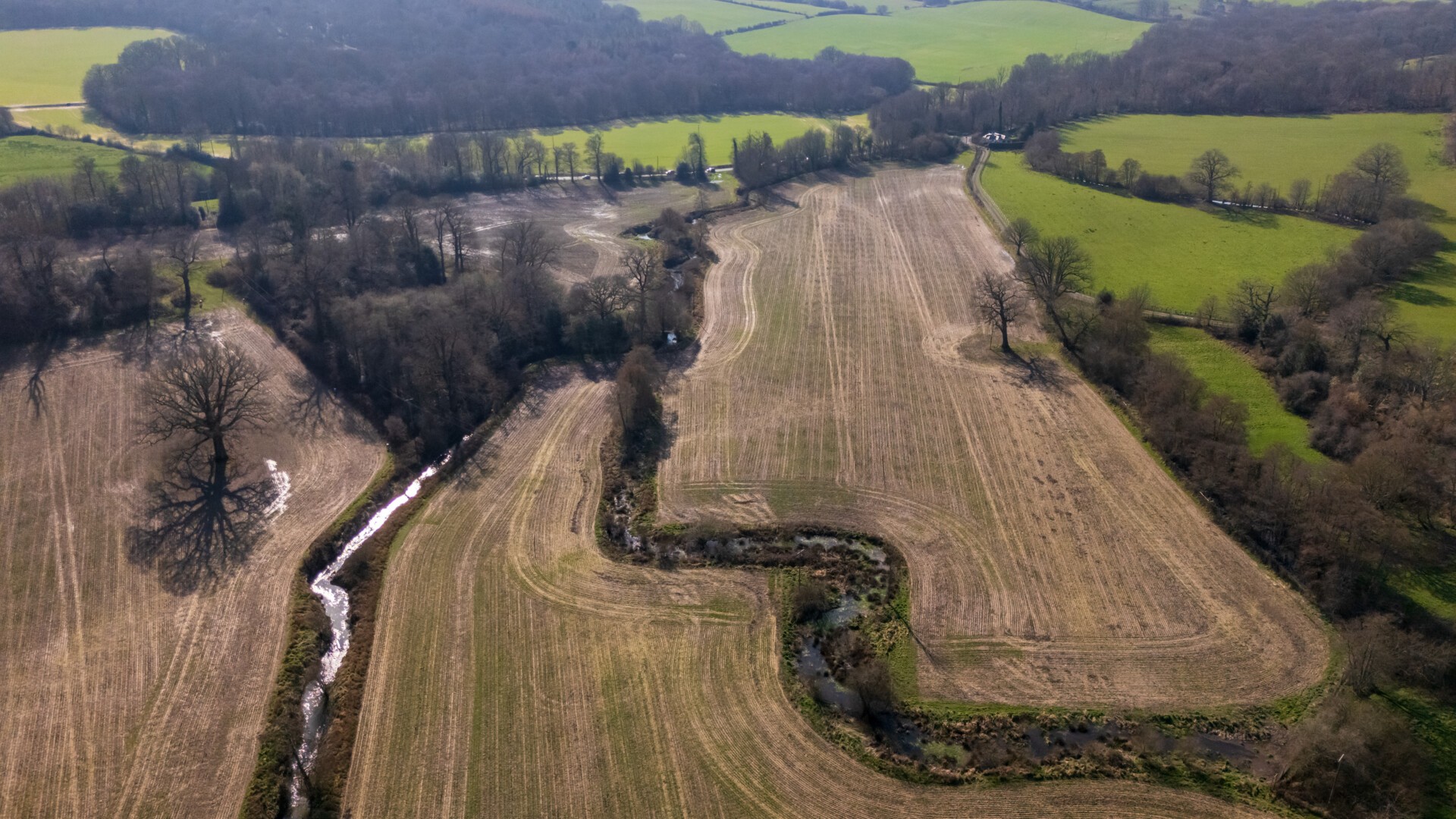
As well helping to counter the emissions, the sites will provide long last ecological benefits. For example, the Ironhurst Valley site will be transformed from arable and pasture to a mix of species-rich grassland, a wet floodplain meadow, and mixed deciduous woodland.
This will not only achieve significant carbon removals, but also a large uplift in biodiversity and in soil health.
London Gatwick is a member of Sustainable Aviation - a coalition of UK airlines, airports, aerospace manufacturers, fuel producers and partners all committed to delivering net zero carbon aviation.
Earlier this year the coalition issued an Advanced Market Signal related to greenhouse gas removals. The commitment will see Sustainable Aviation members invest more than £2m to buy greenhouse gas removal (GGR) credits to support early development of the GGR market.
London Gatwick’s long-term sustainability commitments include:
In its 2025 Sustainability Report GAL updated its progress towards its Decade of Change 2030 sustainability goals including becoming net zero for Scope 1 and 2 emissions by 2030.
Other sustainability highlights from 2025 include:
- Delivery of four of the 14 electric buses ordered. These buses will carry passengers between long stay car parks and terminals
- Developed the UK’s first ‘on airport’ recycling facility for uncontaminated airline cabin waste
- Accredited by Wildlife Trusts, being awarded its Biodiversity Benchmark for the 11th successive year - the only recognised standard that certifies business for wildlife enhancement.
- Delivered more than 675,000 student encounters cumulatively since 2021, well on the way of delivering a million student encounters by 2030
Find out more about GAL’s sustainability work .
Gatwick Airport Limited has committed to net zero for Scope 1 and 2 emissions by 2030. Scope 1 emissions are direct emissions from owned or controlled sources. Scope 2 emissions are indirect emissions from the generation of purchased energy. In 2025, for the twelfth consecutive year, Gatwick Airport Limited (GAL) purchased 100% renewable electricity.
With around 43m annual passengers, London Gatwick is the UK’s second largest and one of Europe’s top airports. It is a vital piece of national infrastructure that drives both the national and regional economies by generating £5.5bn GVA and supporting over 76,000 jobs (2023). More than 60 airlines fly from the airport to over 160 short-haul and more than 50 long-haul destinations. With a declared maximum capacity of 57 movements an hour, London Gatwick is the most efficient single runway airport in the world.
The airport is located 28 miles south of the UK capital and is extremely well-connected, with more than a quarter of England’s population (15m people) – including all of London – less than one hour away by road or rail. A six-year, £2bn sustainable growth programme includes an ambitious plan to be a net zero airport by 2030 and to increase capacity by bringing the airport’s existing Northern Runway into routine use, alongside its Main Runway. VINCI Airports owns a 50.01% stake in the airport, with Global Infrastructure Partners managing the remaining 49.99%.
The project involves the acquisition and restoration of 80ha at a former dairy farm in the heart of the Somerset Levels. This includes the restoration of grazing marsh, wetlands and relic fen and serves as a demonstration of delivering nature-based solutions. It is part of an interlinked network of internationally important wetlands forming the Avalon Marshes area of Somerset’s Levels and Moors.
Ironhurst Valley Nature Reserve (Furnace and Hoathly Farms) is a 125ha area of former productive farmland in the Teise valley, just outside the village of Lamberhurst in the Weald of west Kent. The site is largely arable, with areas of other neutral grassland pasture to the west of the site, and areas of existing lowland mixed deciduous woodland, with the river Teise running through the site west to east. The site will be reverted from arable and pasture to a mix of species rich grassland, wet floodplain meadow, extensions to the lowland mixed deciduous woodland, scrub and also extensive scrubby wood pasture. This will not only achieve significant carbon removals, but also a large uplift in biodiversity and in soil health.
The Wilder Carbon Standard for Nature and Climate assures high quality conservation projects delivered in the UK that result in long-term carbon lock-up and real biodiversity gains. Wilder Carbon then matches these projects to UK buyers who are committed to a broader strategy to reduce emissions, and operate sustainably.
Underpinned by principles for robust data, reinstatement of natural processes for maximised biodiversity and climate resilience, and ethicality; Wilder Carbon provides a mechanism for the private sector to meaningfully invest in cross cutting solutions for nature and climate.
Read more about the Wilder Carbon Standard for Nature and Climate - https://www.wildercarbon.com/how-it-works/
